About
Our Philosophy
We draw out the wonderful potential within each child,
supporting and encouraging them to express it to the fullest.
We acknowledge and respect differences of nationality and culture,
learning the understanding and value of diversity to broaden richness and possibility.
We provide international education that embraces a variety of languages,
so children can thrive as global citizens and global leaders.
We offer a nurturing environment for becoming people of dignity and autonomy,
fostering academic, social, and individual growth through whole-person education,
and cultivating fine intellect and humanity.
Mission
Objectives
-

A child full of compassion and courage,
who acts independently -

A child with intellectual curiosity
who learns proactively -

A self-directed child who
spares no effort in anything -

A child rich in international
awareness and empathy

Principal's Message
"Three languages become your own words — language is all connected."
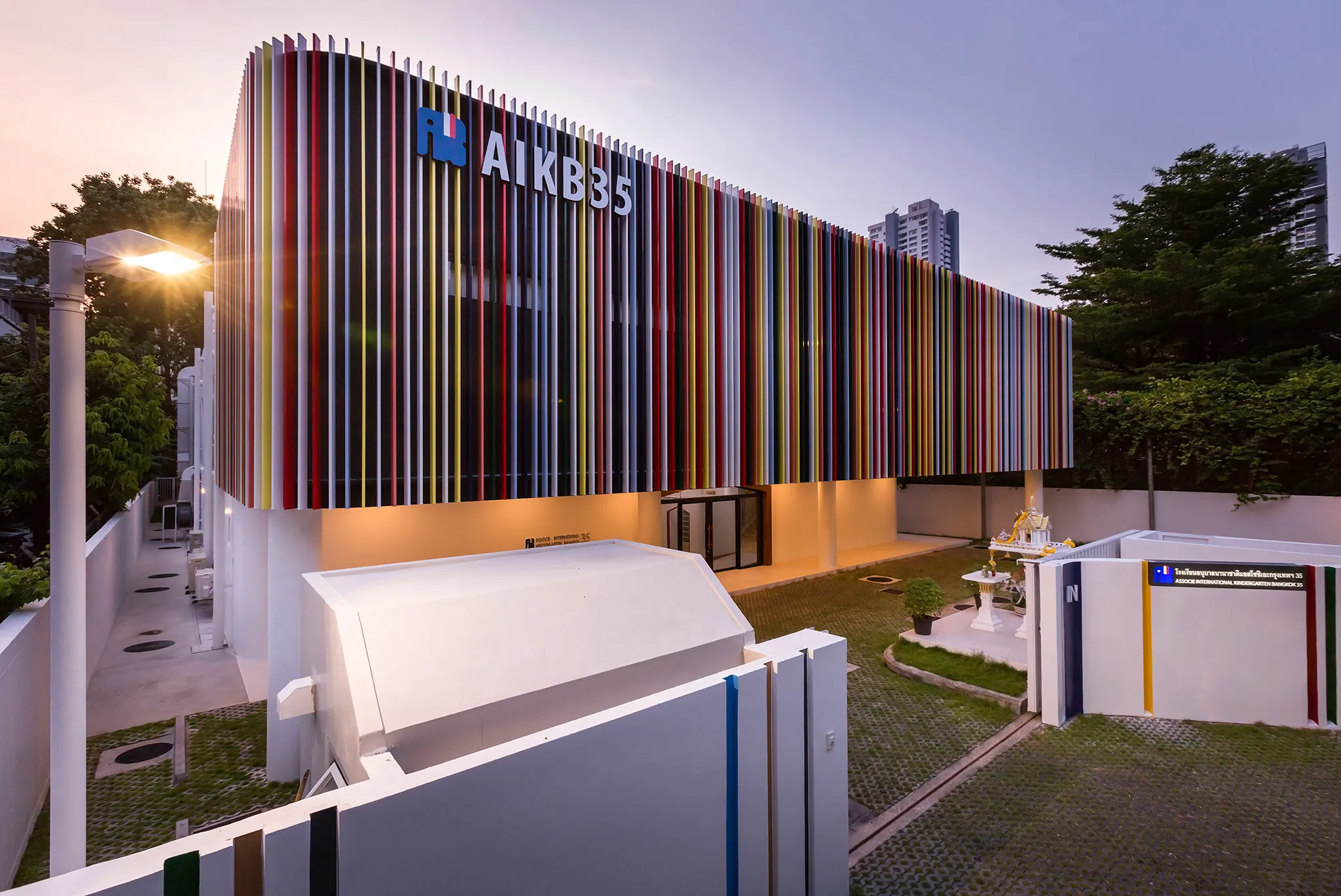
Thank you very much for your interest in Associe International Kindergarten Bangkok 35.
At our school, children from diverse backgrounds — Japanese, Thai, and others — enjoy school life together. And we provide education in three languages: Japanese, English, and Thai.
Why do we not teach in English alone? Because the thinking, expressive, and emotional capacities that Japanese children build through their native language become an essential foundation for deepening their learning of English and Thai. We also wish to nurture hearts that respect one another's cultures through different languages, cultivating the qualities of leaders who can thrive globally.
In practice, these three languages are not "learned separately"; within each child they grow as one connected, rich language ability. This way of thinking is called Translanguaging.
Children can deepen in Japanese what they felt in English or Thai, and express in English or Thai what they thought in Japanese. A child who can express themselves using all three languages as their own words — that is the figure we aim for.
Mrs. Somjai Thadasawad Siulue



Our Educational
Approach
-
Theme-based Inquiry Learning
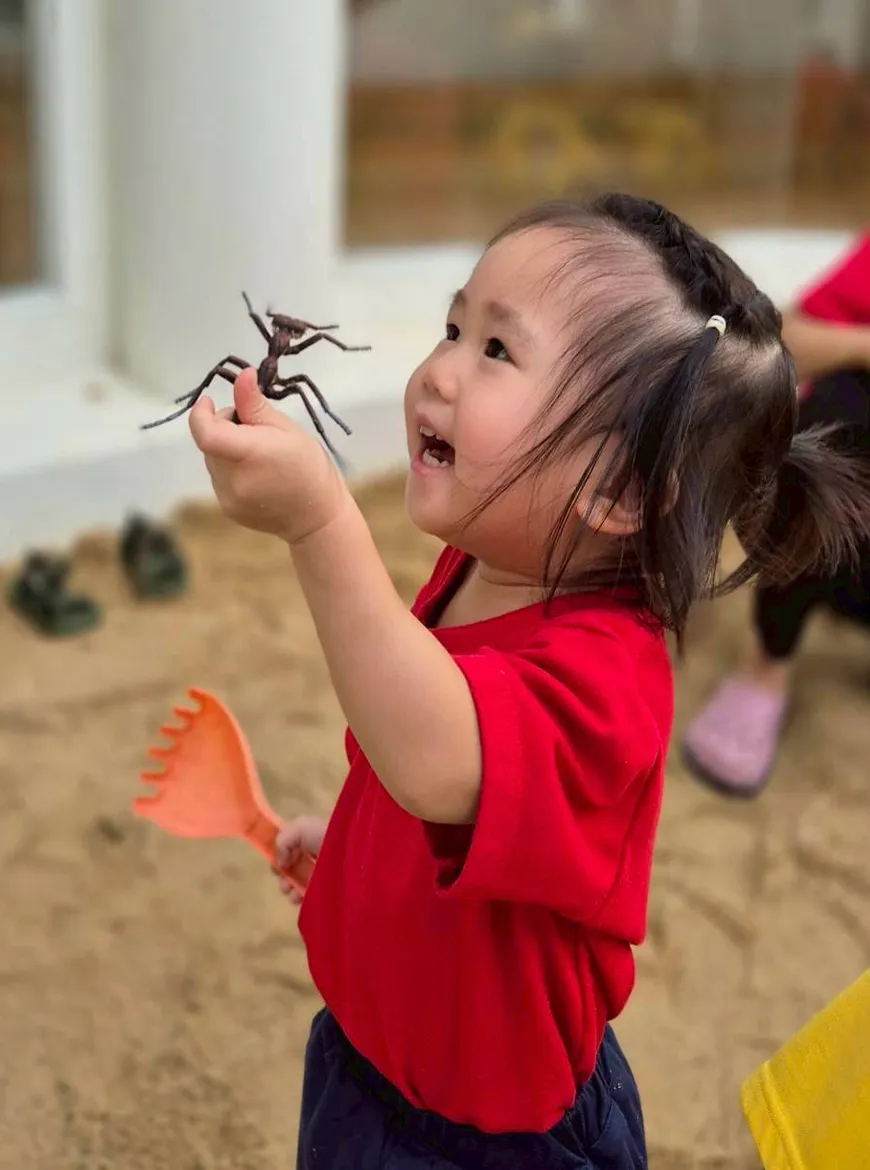
Each month we set a single theme — such as "nature," "animals," "people who work in the community," or "weather and climate" — and explore the familiar world from many angles. What makes our inquiry learning distinctive is that the same theme is studied in three languages: Japanese, English, and Thai. For example, in a month themed on "animals," children encounter animal names and characteristics repeatedly across all three languages, so word meanings take root more naturally and firmly. By learning "knowledge" and "language" at the same time, children develop the ability to express their own ideas in any language.
The same themes also reappear as children move up through the grades. In the younger years it starts with noticing "What animals are there?"; in the older years, learning expands to deeper thinking such as "Why does this animal live in this environment?" Because the depth of inquiry changes with each child's growth, even the same theme brings fresh discoveries every time. -
Immersion Education
At our school, language learning is positioned not only as a "subject studied in class" but also as a "language of daily life." From arrival to departure, conversations with teachers, play, and meals all take place in English, Japanese, and Thai. For a child whose native language is Japanese, for instance, the daily accumulation of hearing, using, and being immersed in English allows them to make the language their own naturally. We create a language environment in which children whose native language is Japanese, or who are learning English for the first time, can blend into English smoothly and without resistance.
-
Project Approach
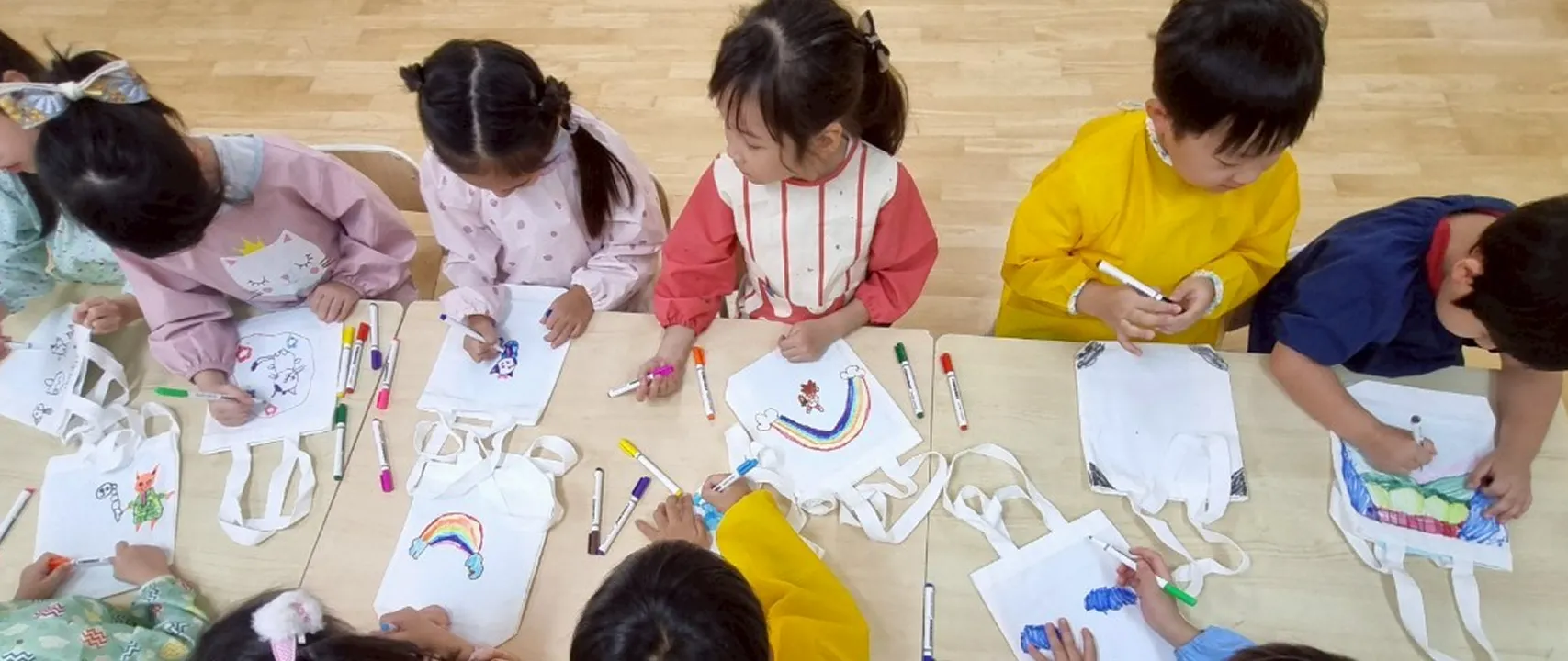
This is an approach in which a single theme is explored deeply and unhurriedly over one to two months. For example, with the theme "eggs," children investigate from many angles — kinds, weight, cooking, and more — experiencing it hands-on.
Starting from children's simple questions, they investigate, experiment, and share with friends. Through this process, thinking, expression, and communication skills grow naturally. By exploring a single theme from many sides and over time, children acquire "the joy of knowing" and "the ability to think for themselves," forming an important foundation that connects to learning from elementary school onward.

-
School bus
About the School Bus
1 4 -
-
Regarding lunch
About Lunch
1 3 -
-
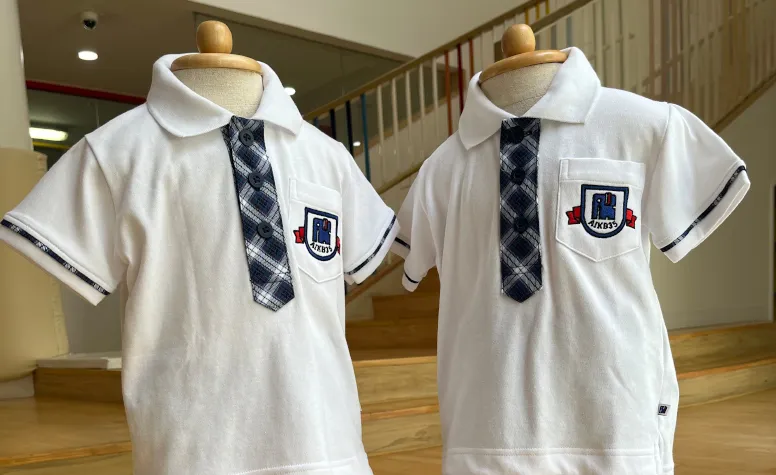
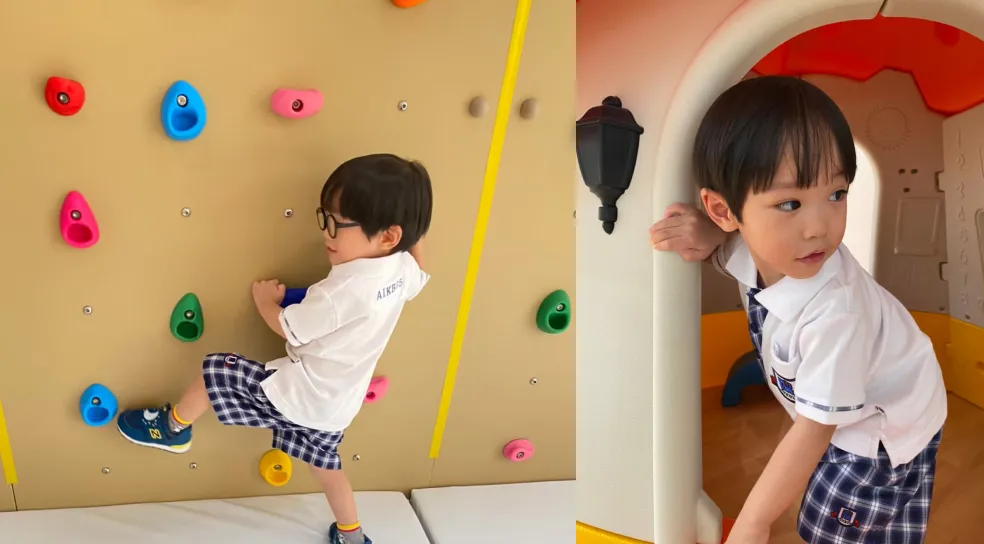
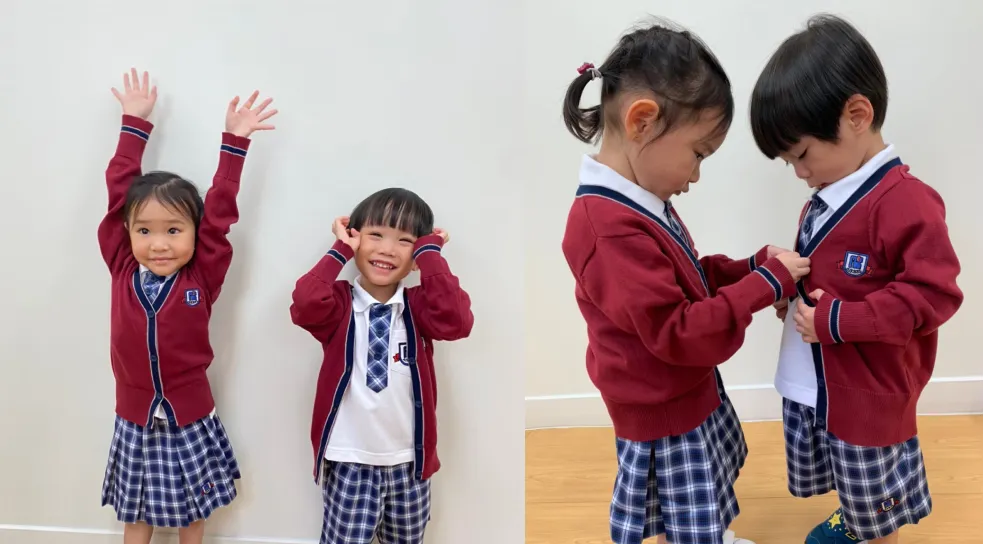
Uniform
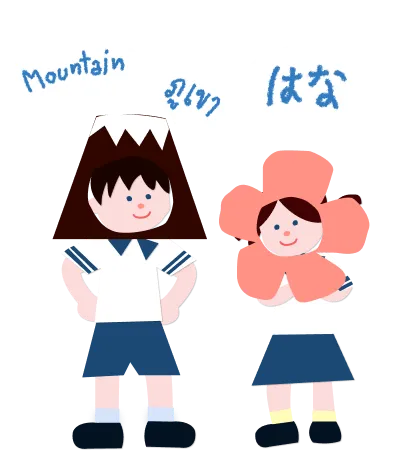
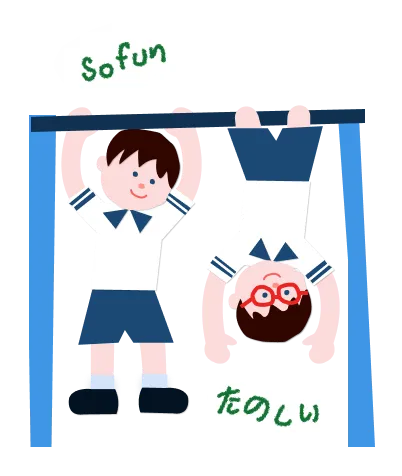
About the Uniform
1 3 -

Initiatives for Safety & Security
-
Security System
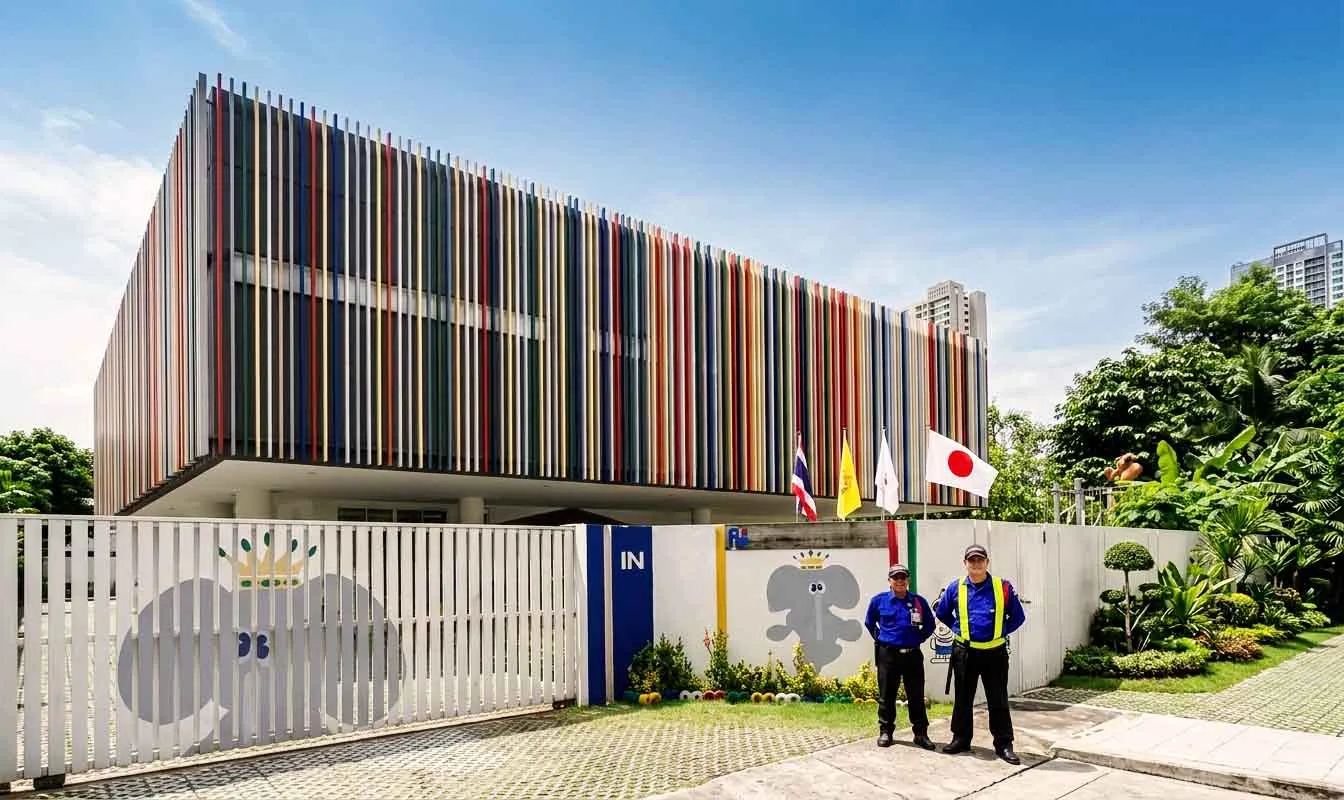
Our security is handled by ALSOK Co., Ltd., a major Japanese security company. Outside of drop-off and pick-up times the school gate is kept closed, and a dedicated guard patrols the perimeter at all times to prevent unauthorized entry. We have also installed about 50 CCTV cameras, continuously monitoring both inside the school and the surrounding area.
-
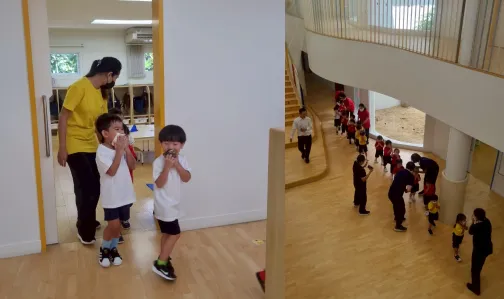
Evacuation Drills
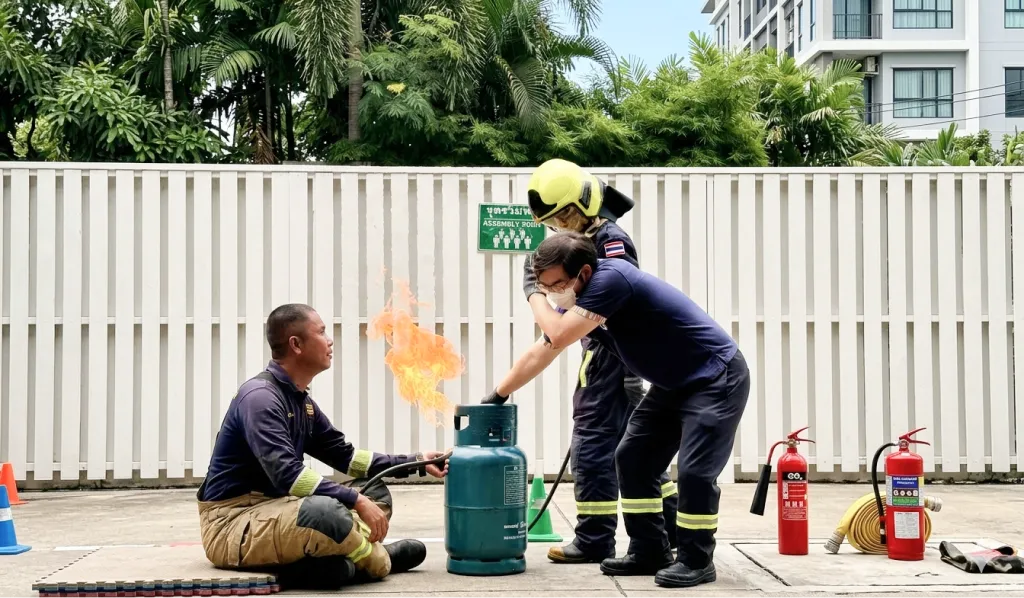
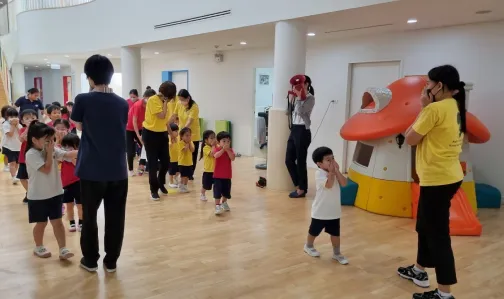
To protect children's lives, we regularly conduct evacuation drills for a variety of scenarios, including fire, earthquake, and suspicious-person response. Through repeated practice, children learn to act calmly and quickly. Staff, too, build their emergency response through drills, maintaining day-to-day readiness to act immediately when needed.
-
-
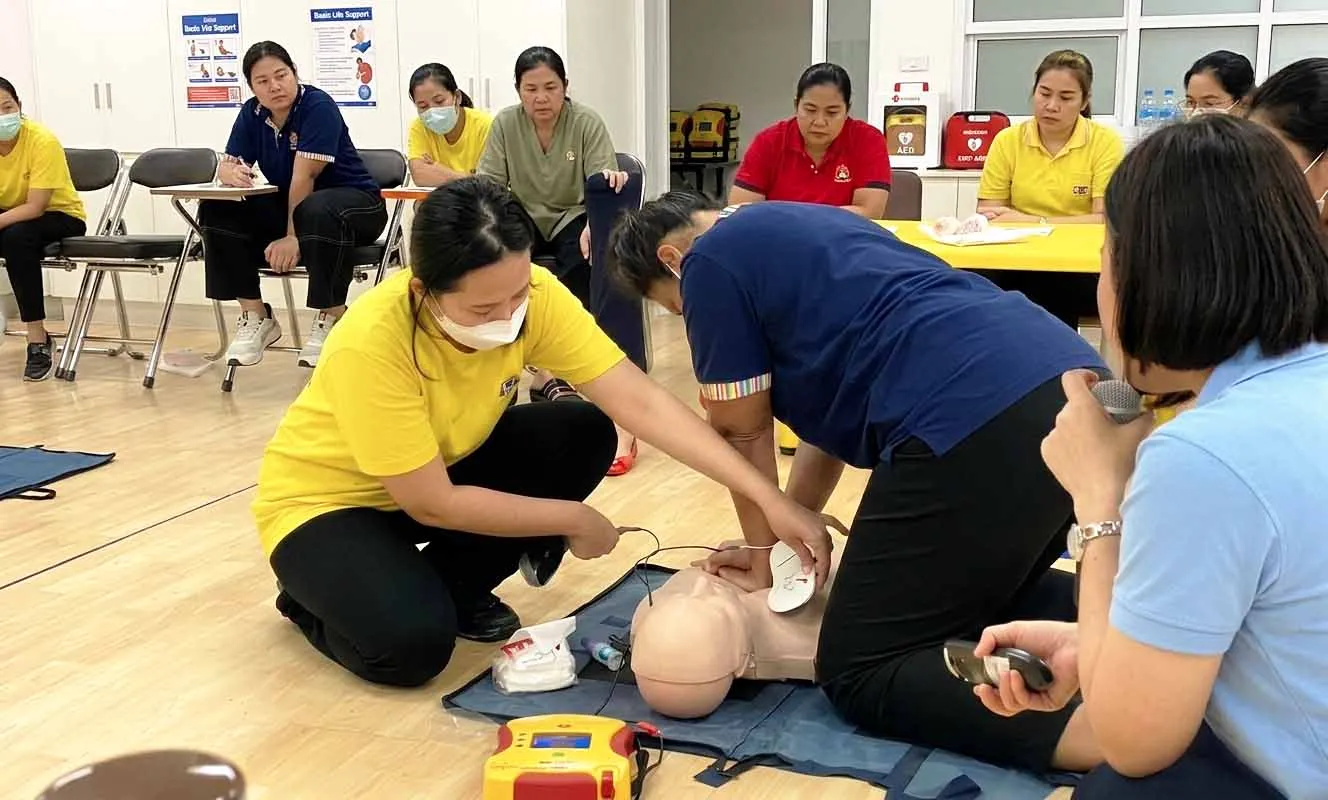
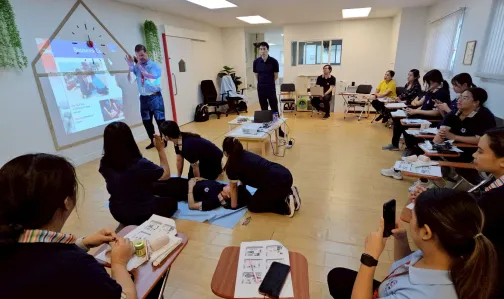
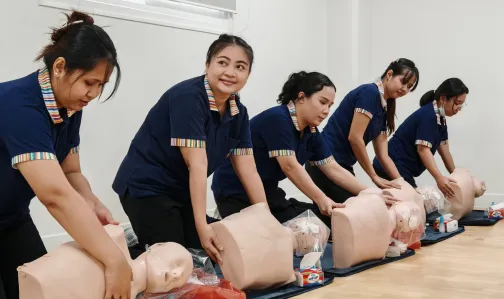
Staff Training
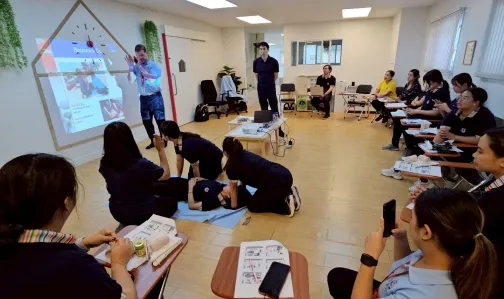
To deepen teachers' expertise, we actively visit other schools' facilities and take part in external training, applying the knowledge and experience gained to our educational practice. Beyond academics, we also regularly hold first-aid training for all teachers, so that any teacher can respond promptly and appropriately in an emergency.
-
-
Air Pollution Measures
& Air Quality ResponseIn Thailand, just as in Japan, not only heat from temperature and humidity but also air quality greatly affects children's health. When deciding on outdoor play, we check the heat index as well as air pollution levels every day. If fine particulate matter PM2.5 reaches 50 or above, or the Air Quality Index (AQI) reaches 100 or above, we prioritize children's health and refrain from outdoor play. By setting standards suited to Thailand's particular environment, we strive to create a school where children can spend each day with peace of mind.
-
-
School Bus Safety
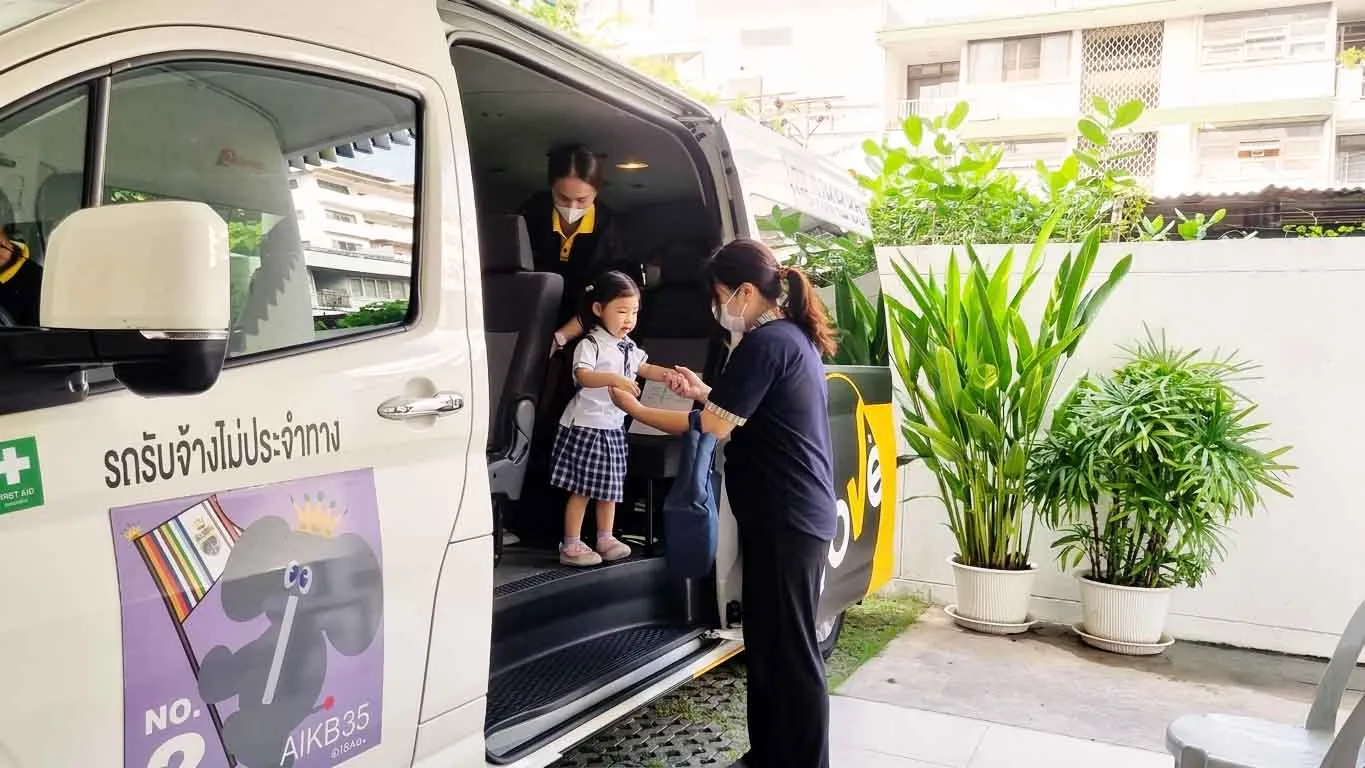
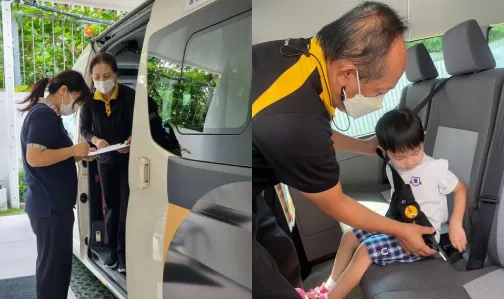
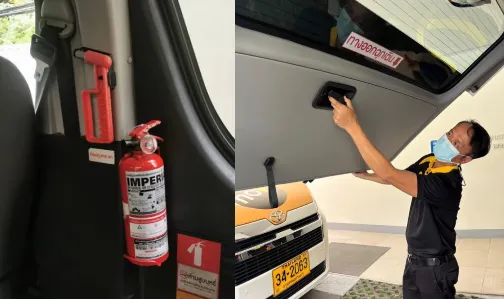
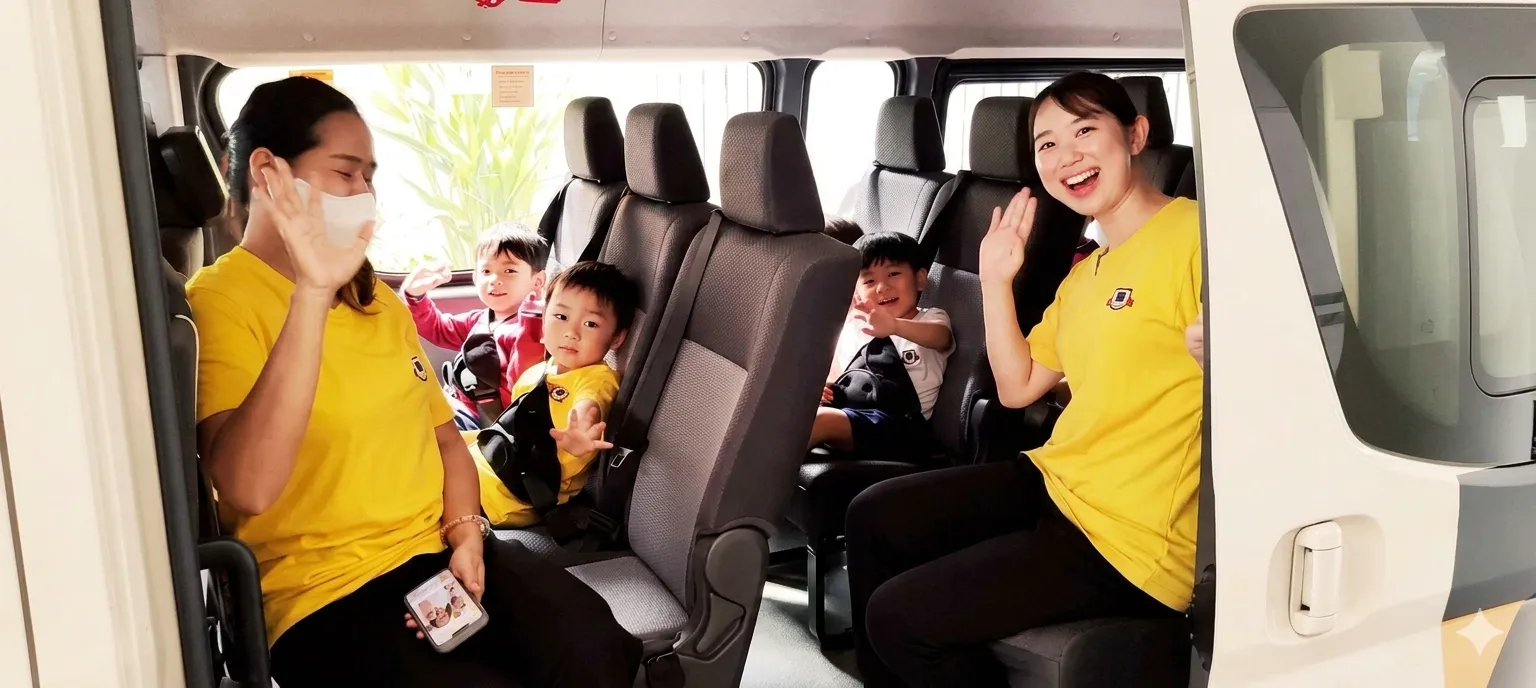
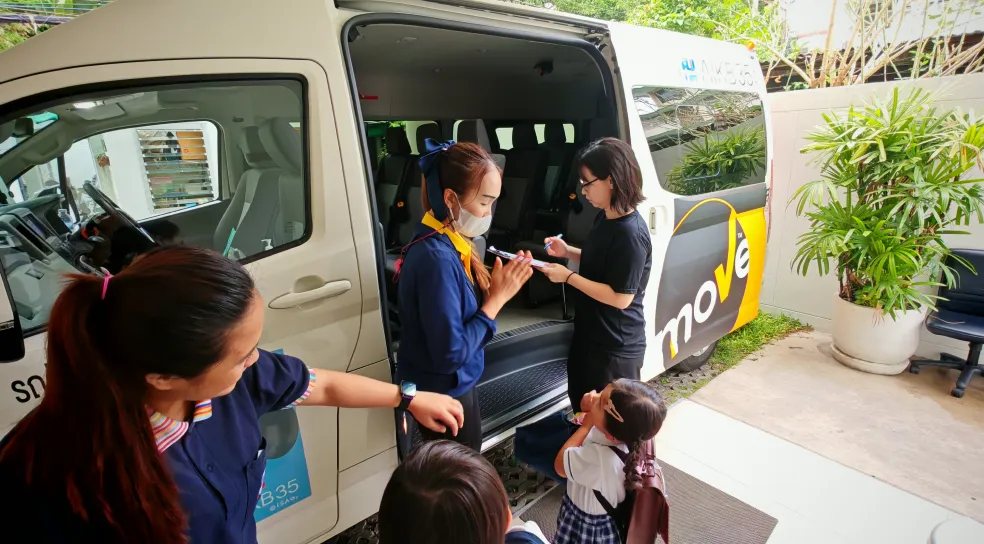
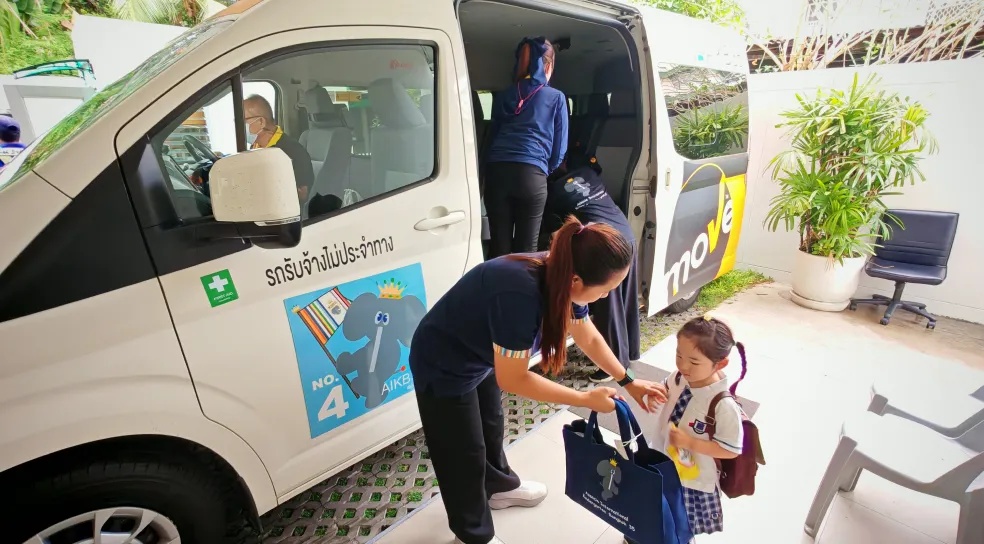
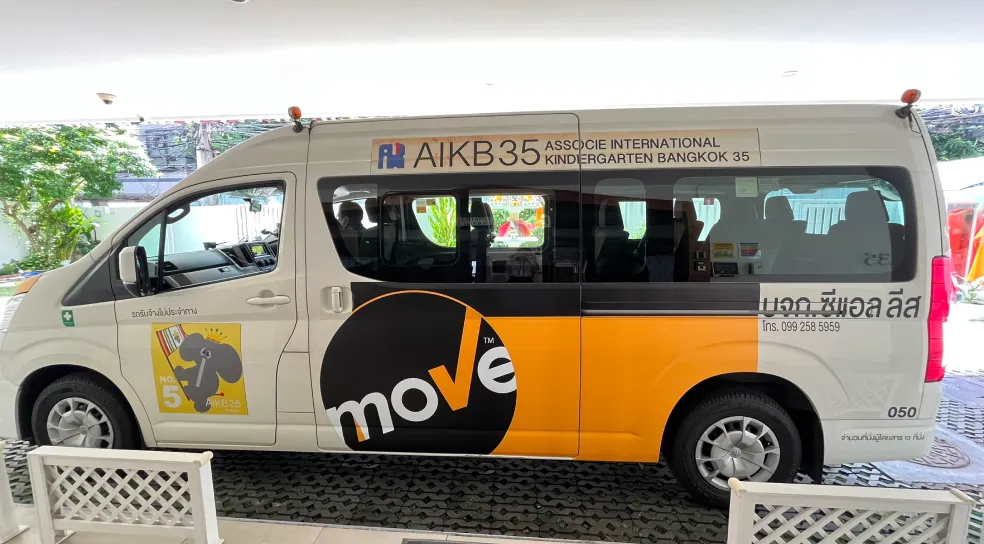
The school bus picks up your child directly from home and brings them to school. Each bus is equipped with GPS so the current location can be checked in real time, giving peace of mind even during traffic jams. Cameras are installed inside so your child's condition can be checked at any time.
To prevent a child from being left behind in the vehicle, we have installed body-detection sensors at four points — front, back, left, and right — on each bus. If an abnormality is detected, a siren sounds automatically. We use gasoline vehicles, which offer higher safety.
Drivers receive specialized training, and every morning before duty we thoroughly conduct alcohol checks and health checks. -
-
Lunch Safety & Nutrition
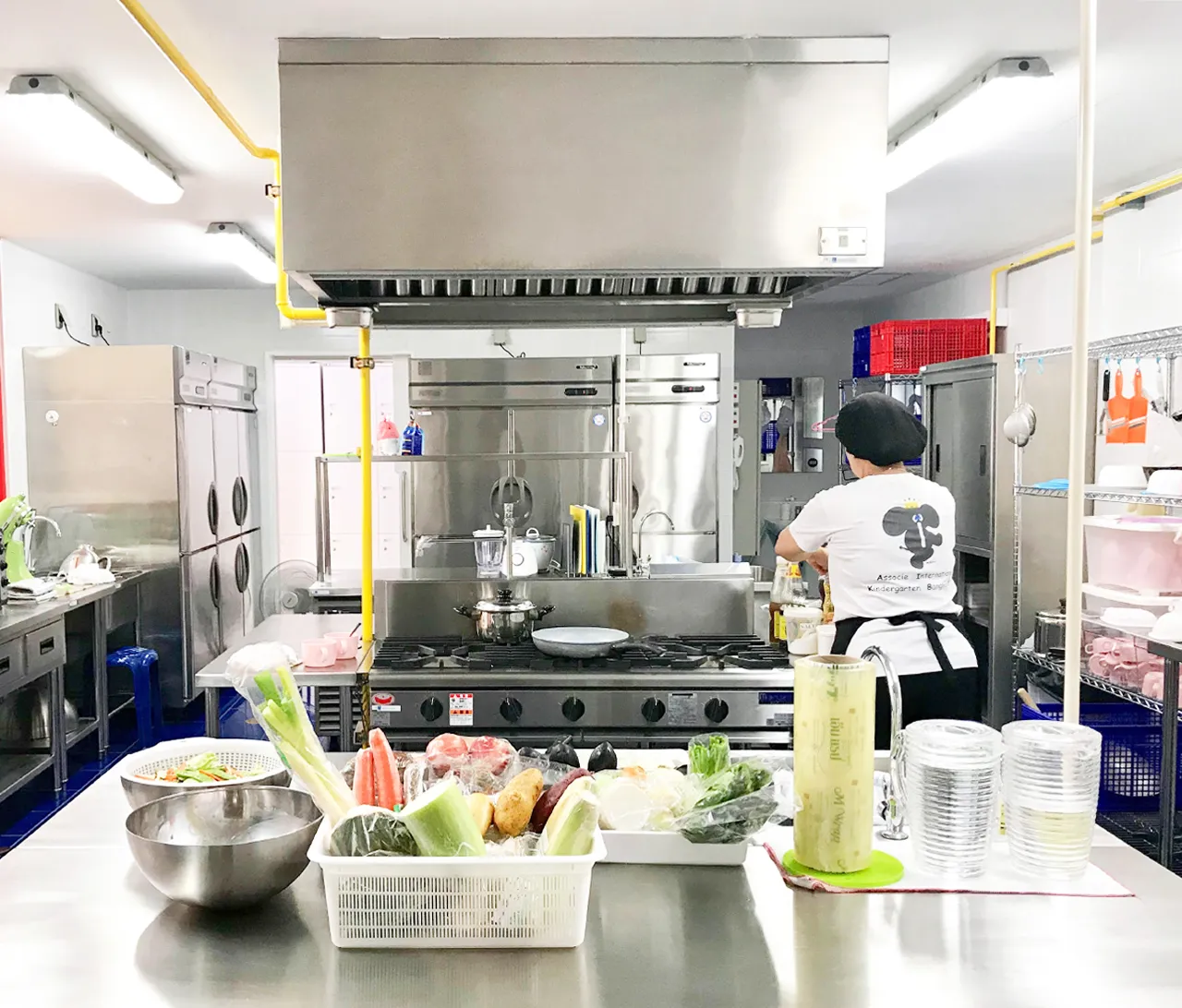
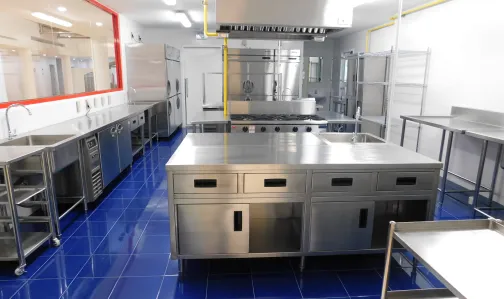
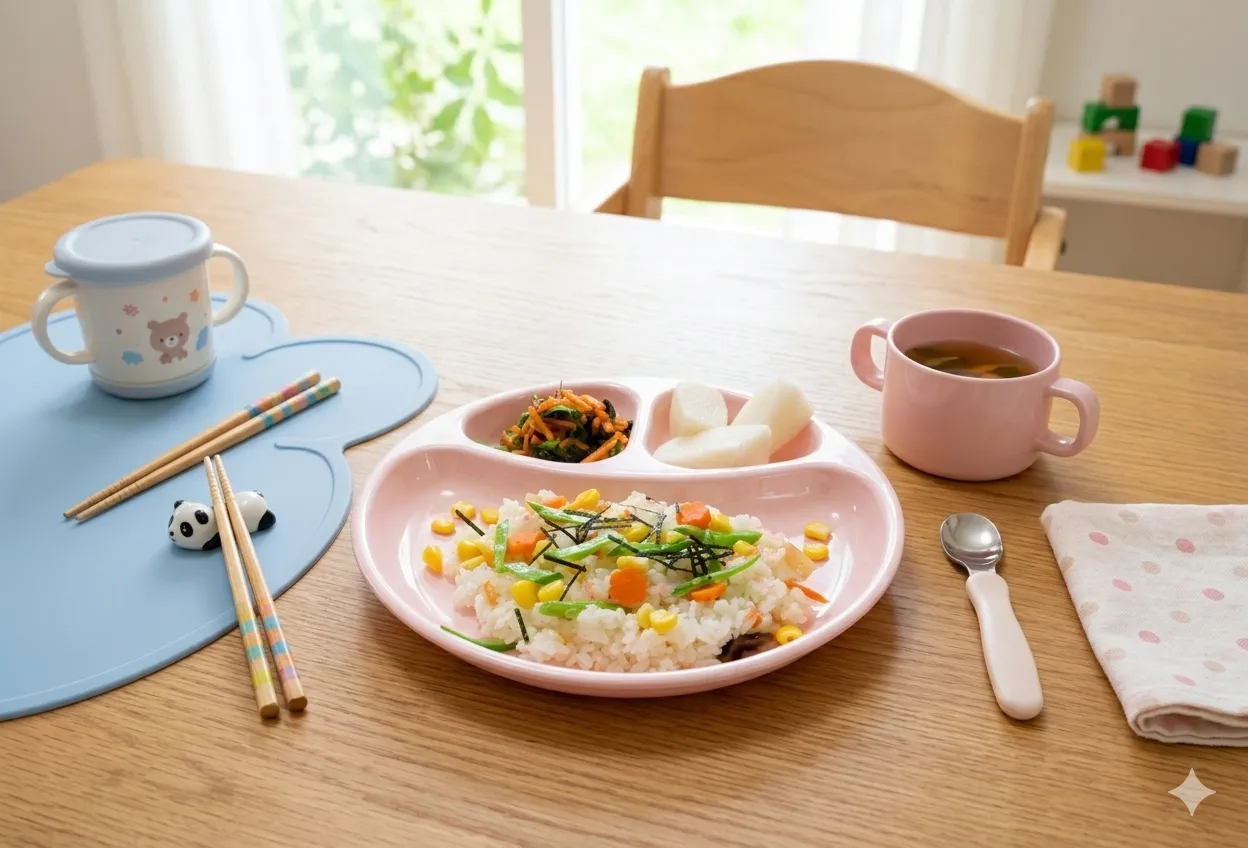
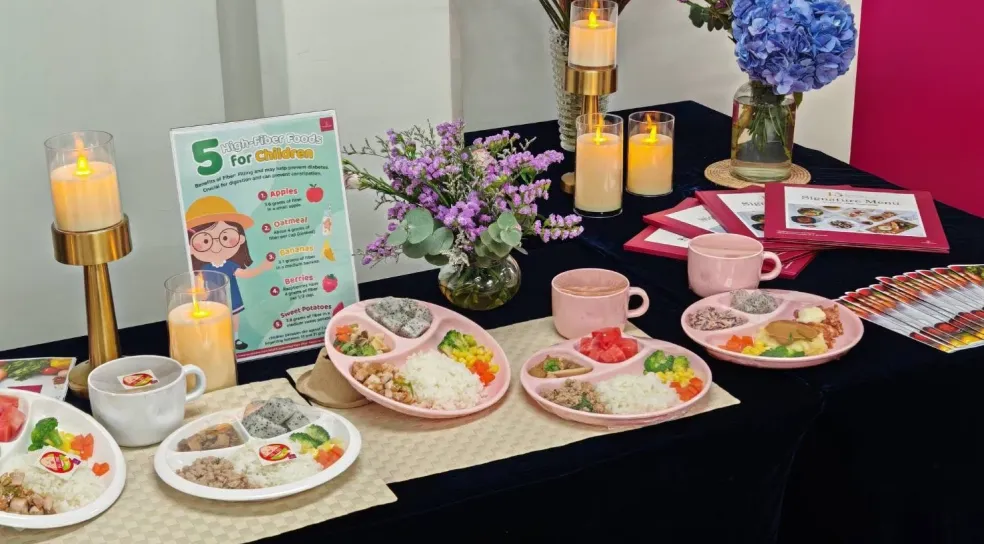
School lunch is made fresh by hand every day in a dedicated kitchen within the school building. We pay close attention to salt content and nutritional balance, cooking in an environment with thorough hygiene management. With a varied menu of Japanese, Western, Chinese, and Thai dishes, we offer opportunities to experience a range of food cultures during the important period when the palate is developing richly. And of course, seconds are always welcome.
-